



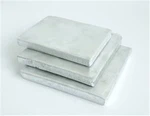


Aluminum Zirconium Master Alloy
Standard: GB/T 27677-2017
Packaging: 50kg/drum for small size alloy, 500kg/pallet for bigger size alloy
|
Grade |
Standard |
Chemistry (wt.%) |
|||||||||
|
AlZr5 |
GB/T 27677-2017 |
Alloy element |
Impurities |
||||||||
|
Zr |
Fe |
Si |
Ca |
Na |
Pb |
Sn |
Zn |
Hf |
Al |
||
|
4.50-5.50 |
≤0.20 |
≤0.20 |
≤0.01 |
≤0.005 |
≤0.01 |
≤0.01 |
≤0.04 |
≤0.20 |
Bal. |
||
The aluminum-zirconium alloy we produced has uniform composition and dispersed grains.


Effect of zirconium on the structure and properties of aluminum alloys
Zirconium plays a role in strengthening, grain refinement and improving heat treatment effects in aluminum alloys. It can significantly improve the mechanical properties and heat resistance of aluminum alloys and is an important alloying element.
-
Strengthening
Zr can form stable precipitation phases, such as Al3Zr. These precipitation phases can significantly improve the strength and tensile strength of aluminum alloys and improve their mechanical properties.
-
Grain refinement
Zirconium can promote grain refinement of aluminum alloys, thereby improving the strength and plasticity of alloys. Grain refinement also helps to improve the fatigue resistance and corrosion resistance of alloys.
-
Heat treatment effect improvement
Zirconium can improve the heat treatment effect of aluminum alloys, promote the formation and distribution of precipitation phases, and improve the thermal stability and heat resistance of alloys.
Application
Zirconium alloys have good heat resistance, corrosion resistance and high strength characteristics, so they are widely used in aerospace, nuclear engineering, chemical equipment and other fields.
Previous
No InformationYou Might Also Like


Send Inquiry