



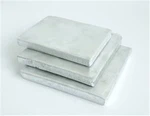

Scandium Metal

We are a professional scandium metal factory, providing distilled scandium metal, refined scandium metal, reduction scandium metal etc. Products are sold well Chinese market and also exported to Europe, America, Asia, and other countries and regions.
Company Advantages
Experience
We were established in 2011, OSC has been devoted to produce and exploit new products, services or processes over 10 years.
Quality
We have ISO quality system certificates and reports. Strict quality control is applied through the leading testing instruments and professional QA personnel.
Production
The company has the world's largest scandium oxide production line with a production capacity of more than 10 tons per year. It is the first enterprise in the world to realize the large-scale production of scandium oxide.
Team
OSC has an outstanding R&D team, high-end technical professionals, and has strong core competitive advantages in technology, market, brand, and quality.


our products advantagess
Quality
Our products are manufactured to the highest standards of quality and safety.
Best Seller
Our products are exported to many countries around the world and are best-sellers in Europe, America, Asia, and other countries and regions.
Competitive Pricing
Although our product has exceptional properties, we offer it at a competitive price.
High Purity
Our product has a purity of over 99.9%.
Types of Scandium Metal
Scandium Metal
Scandium metal is lightweight, but the melting point is much higher than aluminum. It could replace aluminum to make various aircraft. It is a raw material for high-melting alloy, for example Al-Sc alloy, Mg-Sc alloy, Sc-Ti alloy. It can apply to a space shuttle, rocket, and other high-end purposes.
Distilled Scandium Metal
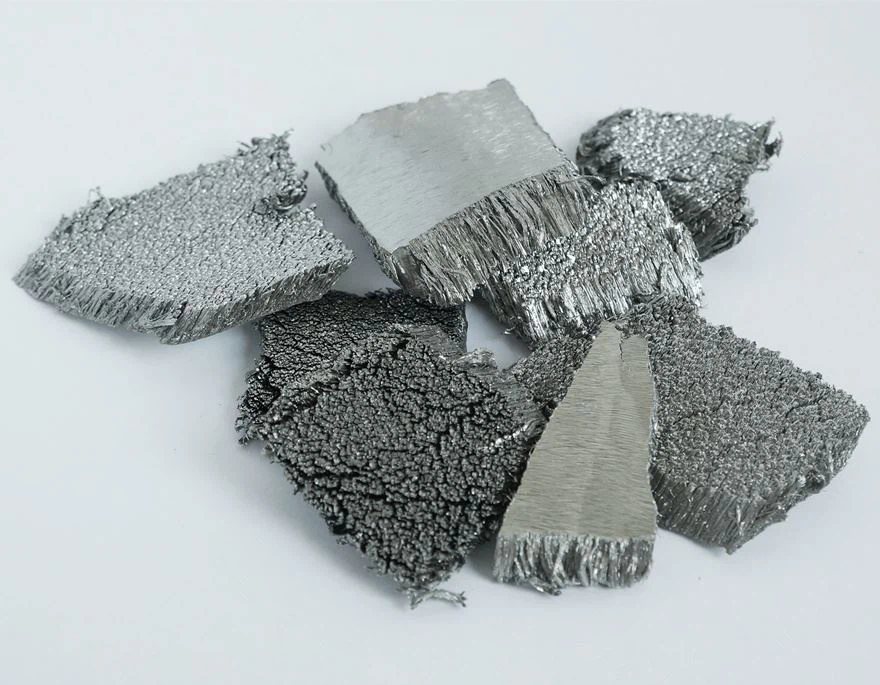
Distilled scandium metal is a dendritic crystal with a metallic luster.
Refined Scandium Metal
Refined Scandium Metal is a silvery white, soft metal. It's usually obtained as a byproduct of uranium refining. It can also be obtained from the minerals thortveitite, bazzite, and wiikite.
Reduction Scandium Metal
Reduction Scandium Metal is a silvery white metal that resembles aluminum and the Rare Earth elements. It is insoluble in NaOH or NH4OH, reacts slowly with water, and is readily soluble in acids.
Applications
Scandium Metal
1. Scandium Metal is applied in optical coating, catalyst, electronic ceramics and laser industry.
2. The main application of Scandium by weight is in Aluminium-Scandium alloys for minor aerospace industry components. Some items of sports equipment, which rely on high performance materials, have been made with Scandium-Aluminium alloys.
3. Employed in solid state synthesis of unusual clusters, Sc19Br28Z4, (Z=Mn, Fe, Ru or Os). These clusters are of interest for their structure and magnetic properties. It is also applied to make super alloy.


Distilled Scandium Metal
It is a crucial material used for the manufacture of sports equipment, including baseball bats, golf clubs, and bicycle frames.
Refined Scandium Metal is used in:
- Aluminum-scandium alloys for aerospace industry components
- Sports equipment such as bicycle frames, fishing rods, golf iron shafts, and baseball bats
- Mercury vapor lamps used to replicate sunlight in studios for the film and television industry
Reduction Scandium Metal
Reduction Scandium Metal is a rare-earth element that has many applications. It is used in:
1.Solid Oxide Fuel Cells
Scandium acts as a stabilizing agent for the solid electrolyte. It enables low-emission fuel cells that operate off the electric grid.
2.Sports Equipment
Scandium raises the melting point of aluminum by more than 800°C. This allows the alloy to be welded and used in baseball bats, lacrosse sticks, and bicycle frames.
3.Vehicles
Aluminum-scandium alloys can reduce vehicle weight, strengthen vehicle frames, and improve performance.
4.Aerospace
Aluminum-scandium alloys can be used in the form of sheet and plate.

Properties
Scandium Metal
1. Soft metal with a silvery appearance
2. Can be oxidized by air
3. Dissolves slowly in most dilute acids.
4. Scandium turnings ignite in the air with a brilliant yellow flame to form scandium (iii) oxide.
Distilled Scandium Metal
Appearance: Sliver grey blocky solid
Density: 2.985 g/cm3
Melting Point: 1814 K (1541 °C, 2806 °F)
Boiling Point: 3109 K (2836 °C, 5136 °F)
Refined Scandium Metal
Refined Scandium Metal is silver gray rare earth. It oxidize in air and show light yellow or pink.
Reduction Scandium Metal
It is sensitive to air and moisture. It will tarnish to a yellowish or pinkish color in air. If water is run over it, a reaction that releases hydrogen gas will result. Scandium is also very reactive with acids.
Product Precautions
Scandium Metal
When handling scandium metal, you should take the following precautions:
1.Avoid Dust: Dust can create a fire hazard.
Avoid Contact: Avoid contact with skin and eyes.
2.Wash Thoroughly: Wash thoroughly before eating or smoking.
3.Use Personal Protective Equipment: Wear protective gloves, clothing, eye protection, and face protection.
4.Store in a Closed Container: Store scandium metal in tightly-closed containers under argon or mineral oil.
5.Keep Away from Ignition Sources: Keep away from heat, hot surfaces, sparks, open flames, and other ignition sources.
6.Do not Release into the Environment: Do not allow material to be released to the environment without official permits.
Distilled Scandium Metal
Here are some precautions for handling distilled scandium metal:
1.Storage: Store in a tightly-closed container under argon or mineral oil. Keep away from heat, hot surfaces, sparks, open flames, and other ignition sources.
2.Skin Contact: Wash thoroughly with water and soap.
3.Eye Contact: Rinse opened eye for several minutes under running water. Then consult a doctor.
4.Swallowing: Drink copious amounts of water and provide fresh air.
5.Spills: Vacuum up spill using a high efficiency particulate absolute (HEPA) air filter. Place in a closed container for disposal.
6.Environmental Precautions: Isolate runoff to prevent environmental pollution.
Refined Scandium Metal
Here are some precautions for handling distilled scandium metal:
1.Storage: Store in a tightly-closed container under argon or mineral oil. Keep away from heat, hot surfaces, sparks, open flames, and other ignition sources.
2.Skin Contact: Wash thoroughly with water and soap.
3.Eye Contact: Rinse opened eye for several minutes under running water. Then consult a doctor.
4.Swallowing: Drink copious amounts of water and provide fresh air.
5.Spills: Vacuum up spill using a high efficiency particulate absolute (HEPA) air filter. Place in a closed container for disposal.
6.Environmental Precautions: Isolate runoff to prevent environmental pollution.
Reduction Scandium Metal
Here are some precautions for handling reduction scandium metal:
1.Handle in a controlled process
2.Use a dry protective gas
3.Protect from ignition sources
4.Use non-sparking tools
5.Wear personal protective equipment
6.Keep unprotected people away
7.Store in a cool, dry place
8.Avoid breathing dusts
9.Do not release material to the environment without permits
Certifications
We has ISO quality system certificates and reports.


Our Factory
The company possesses first-class technology R&D platforms and production lines of scandium and vanadium products.


Frequently Asked Questions
Q: Is scandium a rare earth metal?
Q: What is Distilled Scandium Metal?
Q: What is Refined Scandium Metal?
Q: What is Reduction Scandium Metal?
Q: Where else can Refined Scandium Metal be used?
Q: What are the applications of Distilled Scandium Metal in the medical industry?
Q: Distilled Scandium Metal vs. Refined Scandium Metal, which one is better?
Q: What are the health effects of Scandium?
Scandium has no biological role. Only trace amounts reach the food chain, so the average person's daily intake is less than 0.1 microgram.
Scadium is not toxic, although there have been suggestions that some of its compounds might be cancerogenic.
Scandium is mostly dangerous in the working environment, due to the fact that damps and gasses can be inhaled with air. This can cause lung embolisms, especially during long-term exposure. Scandium can be a threat to the liver when it accumulates in the human body.
Q: What impact does Scandium have on the environment?
Scandium is dumped in the environment in many different places, mainly by petrol-producing industries. It can also enter the environment when household equipment is thrown away. Scandium will gradually accumulate in soils and water soils and this will eventually lead to increasing concentrations in humans, animals and soil particles.
With water animals scandium causes damage to cell membranes, which has several negative influences on reproduction and on the functions of the nervous system.
Q: Where is Scandium distributed?
Scandium is only the 50th most abundant element on hearth, it is distributed widely, occurring in trace quantities in over 800 minerals. The blue color of the aquamarine variety of beryl is thought to be caused by scandium.
Only about 3% of plants that were analysed for scandium shows its presence, and even those amounts were tiny, with vegetable having only 5 ppb although grass has 70 ppb.
Q: What are the physical properties of Scandium Metal?
- Scandium Metal is a delicate, light silvery-white metal that becomes slightly yellow or pink when exposed to air.
- It is almost as light as aluminum (low density), but has a significantly higher melting point.
- The taste and odor of Scandium are undetermined.
- 'Sc' is in a solid state at a room temperature.
- Scandium Metal is malleable and ductile.
- Sc is often regarded as a nonmagnetic element.
- This substance is not only unusual in terms of the element's valency (3), but it is also an excellent conductor of electricity for reasons that have yet to be discovered.
- Scandium Metal has a density of 2.99 grams per cubic centimeter. It has a melting point of 1541°C and a boiling point of 2836°C.
- Scandium Metal is the most effective known microalloying element for strengthening aluminum while simultaneously improving flexibility, heat and corrosion resistance, and weight.
Q: What are the chemical properties of Scandium?
- Scandium is similar to rare earth elements chemically.
- If scandium is exposed in air it will develop a layer of an oxide, which appears to be slightly yellow or pinkish in color.
- It weathers easily and dissolves slowly in most diluted acids.
- When scandium turnings are ignited in the air, it forms scandium oxide and emits a bright yellow flame.