



Vanadium

We are a professional vanadium factory, providing vanadium pentoxide powder, vanadium pentoxide flake, ammonium metavanadate 99.7%, ammonium metavanadate 99.5% etc. Products are sold well Chinese market and also exported to Europe, America, Asia, and other countries and regions.
Company Advantages
Experience
We were established in 2011, OSC has been devoted to produce and exploit new products, services or processes over 10 years.
Quality
We have ISO quality system certificates and reports. Strict quality control is applied through the leading testing instruments and professional QA personnel.
Production
The company has the world's largest scandium oxide production line with a production capacity of more than 10 tons per year. It is the first enterprise in the world to realize the large-scale production of scandium oxide.
Team
OSC has an outstanding R&D team, high-end technical professionals, and has strong core competitive advantages in technology, market, brand, and quality.


our products advantagess
Quality
Our products are manufactured to the highest standards of quality and safety.
Best Seller
Our products are exported to many countries around the world and are best-sellers in Europe, America, Asia, and other countries and regions.
Competitive Pricing
Although our product has exceptional properties, we offer it at a competitive price.
High Purity
Our product has a purity of over 99.9%.
Types of Vanadium
Vanadium
Vanadium is a hard, silver-grey metallic element. It is a ductile transition metal with a natural resistance to corrosion and stability against alkalis, acids and salt water. Vanadium is found in over 60 different minerals including vanadinite, carnotite, roscoelite and patronite.
Vanadium Pentoxide Powder
Vanadium pentoxide (V2O5) is a metal oxide that is orange-yellow or brick red in color. It is a crystalline powder that is soluble in strong acids but not in ethyl alcohol.
Vanadium Pentoxide Flake
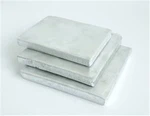
Vanadium pentoxide flakes are a commercial form of the inorganic compound vanadium(V) oxide. The flakes are brown in color and are used in the iron and steel industry.
Ammonium Metavanadate
Ammonium metavanadate is an inorganic compound represented by the formula NH4VO3.
Application of Vanadium

Vanadium
About 80% of the vanadium produced is used as a steel additive. Vanadium-steel alloys are very tough and are used for armour plate, axles, tools, piston rods and crankshafts. Less than 1% of vanadium, and as little chromium, makes steel shock resistant and vibration resistant. Vanadium alloys are used in nuclear reactors because of vanadium's low neutron-absorbing properties.
Vanadium(V) oxide is used as a pigment for ceramics and glass, as a catalyst and in producing superconducting magnets.
Vanadium Pentoxide Powder
Vanadium pentoxide is used in industrial processes as a catalyst. Some of its uses include:
●Oxidation of SO2 to SO3
●Oxidation of ethanol to ethanale
●Production of phthalic anhydride, polyamide, and oxalic acid


Vanadium Pentoxide Flake
Vanadium Pentoxide Flake are mainly used in the iron and steel industry. By refining the structure and grains of steel, the grain coarsening temperature is increased, thereby increasing the strength, toughness and wear resistance of the steel. In addition, vanadium flakes are excellent in titanium alloy Improved effect, used as an additive in the aerospace field.
Ammonium Metavanadate
The chemical is primarily used as an intermediate or as an oxidizing agent. It is commonly used as a substrate in the synthesis of silver vanadate, manganese vanadate, and vanadium oxide. It can catalyze the synthesis of octahydroquinazolinone derivatives and azalactone derivatives.

Properties
It's a hard, silver-gray, malleable element that's resistant to corrosion, acids, alkalis, and salt water.
Vanadium pentoxide flakes have the following properties:
- Color: Yellow to red crystalline powder
- Solubility: 0.006 mol/L in distilled water at 20°C
- Density: Denser than water
Vanadium pentoxide is a metal oxide with the molecular formula V2O5. Appearance and properties: orange yellow, brick red, red brown crystalline powder or grayish-black flake. Relative density (water =1) : 3.35. Boiling point (℃) : 1750 (decomposition) Molecular weight: 182.00. Solubility: slightly soluble in water, insoluble in ethanol, soluble in strong acid, strong base.
As a crystalline solid, it is white, but samples can sometimes appear slightly yellow. Is denser than water, and is slightly soluble.
Certifications
We have ISO quality system certificates and reports.


Our Factory
The company possesses first-class technology R&D platforms and production lines of scandium and vanadium products.


Frequently Asked Questions
Q: What is Vanadium?
Vanadium is rarely found in nature, but it's the fifth most abundant transition metal in the Earth's crust.
It's often found in ores with titanium and iron, and in coal and oil deposits.
Q: What are the health effects of Vanadium on the body?
- Inhalation: Breathing air with vanadium pentoxide can cause coughing that lasts for days.
- Contact: Can irritate the skin and eyes.
- High exposure: Can cause nausea, vomiting, abdominal pain, and greenish discoloration of the tongue.
Q: What research does Vanadium have?
- Lower blood sugar levels
- Improve sensitivity to insulin in people with type 2 diabetes
- Lower total and LDL ("bad") cholesterol
Q: What can Vanadium be used for?
- Vanadium can be used to make steel alloys, for use in space vehicles, nuclear reactors and aircraft carriers, etc.
- Vanadium steel alloys' strength means that they are perfectly suited to the creation of tools, axles, piston rods and as girders in construction.
- In Vanadium Flow Batteries (VFBs), vanadium is used to create a reliable, safe and stable solution for the storage of renewable energy.
- Vanadium can be utilised in ceramics as a pigment.
- Vanadium pentoxide can be used as a catalyst in the manufacture of dyes and printing fabrics.
- Superconducting magnets can be made from vanadium gallium tape.
- Vanadium oxide is used in the manufacture of sulphuric acid.
- In the medical sphere, vanadium is used to treat a number of ailments, including diabetes, heart disease and high cholesterol. It has also been used in the cathodes of batteries for implantable cardioverter defibrillators.
- Research is underway to utilise vanadium in the cathodes of batteries for electric vehicles.
- Scientists have used the unique properties of vanadium to produce smart windows which can lock heat out during the summer and retain heat inside when the weather cools down.
Q: What are the applications of Vanadium Pentoxide Powder?
- Widely used in metallurgy, chemical and other industries, mainly used for smelting vanadium iron.
- As an alloy additive, accounting for more than 80% of the total consumption of vanadium pentoxide
- Followed by catalysts, i.e. catalysts, accounting for about 10% of the total.
- Inorganic chemicals, chemical reagents, enamels and magnetic materials accounting for about 10% of the total.
Q: What are the adverse effects of long-term exposure to Vanadium Pentoxide Powder on the body?
- Severe irritation of the eyes, skin, and upper respiratory tract
- Persistent inflammations of the trachea and bronchi
- Pulmonary edema
- Systemic poisoning
Q: Is vanadium pentoxide a carcinogen?
Q: What impact does vanadium have on the environment?
Vanadium causes the inhibition of certain enzymes with animals, which has several neurological effects. Next to the neurological effects vanadium can cause breathing disorders, paralyses and negative effects on the liver and kidneys.
Laboratory tests with test animals have shown, that vanadium can cause harm to the reproductive system of male animals, and that it accumulates in the female placenta.
Vanadium can cause DNA alteration in some cases, but it cannot cause cancer with animals.
Q: Is vanadium found in humans?
Q: How can families reduce the risk of exposure to vanadium?
- Vanadium is present in some supplements. Consult with your doctor before taking supplements containing vanadium to determine if they are appropriate for you. Supplements should be kept out of reach of children.
- Vanadium is a component of tobacco smoke. Avoid smoking in enclosed spaces like inside the home or car in order to limit exposure to children and other family members.
Q: How might I be exposed to vanadium?
- Eating foods containing vanadium, higher levels are found in seafood. Vanadium is found in some nutritional supplements.
- Breathing air near an industry that burns fuel oil or coal; these industries release vanadium oxide into the air.
- Working in industries that process vanadium or make products containing vanadium.
- Breathing contaminated air or drinking contaminated water near waste sites or landfills containing vanadium.
- Breathing cigarette smoke.
- Vanadium is not readily absorbed by the body from the stomach, gut, or contact with the skin.
Q: How can vanadium affect children?
Studies in animals exposed during pregnancy have shown that vanadium can cause decreases in growth and increases in the occurrence of birth defects. These effects are usually observed at levels which cause effects in the mother. Effects have also been observed at vanadium doses which did not cause effects in the mother.
Q: What are the five uses of vanadium?
- The production of metal alloys.
- Inside nuclear reactors.
- Vanadium oxide is used as a catalyst in sulfuric acid production.
- Vanadium oxides are sometimes used as dyes.
- Vanadium is a trace mineral in human diets, and is used for bone growth.
Q: Where is Vanadium Found?
Q: What are the physical properties of Vanadium?
- Vanadium has a melting point of 1910 degrees Celsius and a boiling point of 3407 degrees Celsius. It exists as a solid at room temperature.
- Vanadium has a density of 6.1 grams per cubic centimeter. It is often described as a heavy metal, which are those metal elements with densities of greater than 5 grams per cubic centimeter.
- Pure Vanadium is gray-white and lustrous in appearance.
- Vanadium is ductile (can be drawn out into thin wires) and malleable (can be beaten or pressed into shape).
- As previously mentioned, Vanadium was given its name due to its colorful compounds. Vanadium forms different colored oxides based on the different oxidation states in them. These include Vanadium(II) Oxide (Purple), Vanadium (III) Oxide (Green), Vanadium (IV) Oxide (Blue), and Vanadium (V) Oxide (Yellow.)
Q: What are the chemical properties of Vanadium?
- Vanadium reacts with oxygen in the air when heated to primarily form Vanadium(V) Oxide, also called vanadium pentoxide. However, samples of vanadium oxide also include molecules of vanadium that reacted with oxygen in its 3+ oxidation state to form vanadium(III) oxide, also called vanadium sesquioxide; and it is 4+ oxidation state to form vanadium (IV) oxide, also called vanadium dioxide. A thin layer of vanadium oxide forms on the surface of vanadium samples exposed to air, which prevents its further corrosion in air or water.
- The two naturally occurring vanadium isotopes are: Vanadium-50 (0.25% abundance) and Vanadium-51 (99.75% abundance.)
- Vanadium reacts with fluorine in the presence of heat to form vanadium(V) fluoride, which is also called vanadium pentafluoride.
- Although vanadium is considered toxic in high doses, on average humans take 0.01mg of vanadium in their daily diets, which is used primarily for bone growth