



Battery Materials

We are a professional battery materials factory, providing scandia stabilized zirconia, scandia ceria stabilized zirconia, vanadium electrolyte, manganese sulphate etc. Products are sold well Chinese market and also exported to Europe, America, Asia, and other countries and regions.
Company Advantages
Experience
We were established in 2011, OSC has been devoted to produce and exploit new products, services or processes over 10 years.
Quality
We have ISO quality system certificates and reports. Strict quality control is applied through the leading testing instruments and professional QA personnel.
Production
The company has the world's largest scandium oxide production line with a production capacity of more than 10 tons per year. It is the first enterprise in the world to realize the large-scale production of scandium oxide.
Team
OSC has an outstanding R&D team, high-end technical professionals, and has strong core competitive advantages in technology, market, brand, and quality.


products advantagess
Quality
Our products are manufactured to the highest standards of quality and safety.
Best Seller
Our products are exported to many countries around the world and are best-sellers in Europe, America, Asia, and other countries and regions.
Competitive Pricing
Although our product has exceptional properties, we offer it at a competitive price.
High Purity
Our product has a purity of over 99.9%.
Types of Battery Materials
Scandia Stabilized Zirconia
Scandia-stabilized zirconia (ScSZ) is a zirconia-based electrolyte material that conducts oxide ions. It's used as an alternative to YSZ, which is from the same oxide group.
Scandia Ceria Stabilized Zirconia
Scandia ceria stabilized zirconia (ScSZ) is a complex ceramic material that contains Sc2O3, ZrO2, and CeO2. It's a zirconia-based oxide ion-conducting electrolyte material.
Vanadium Electrolyte
Vanadium electrolyte is the vital component of VRFBs, an increasingly popular energy storage technology. VRFBs are an energy storage technology capable of delivering load levelling and storage capacity for remote generation and renewable generation applications.
Manganese Sulphate
Manganese sulfate is an industrial chemical that's made up of manganese, oxygen, and sulfur. It's also known as manganese (II) sulfate and has the chemical formula MnSO4.
Manganese sulfate is a white, odorless, crystalline solid that's soluble in water. It's also soluble in primary alcohols, but insoluble in aprotic solvents like diethyl ether or benzene.

Applications
Scandia Stabilized Zirconia
Scandia Stabilized Zirconia is used as an SOFC electrolyte. Scandium oxide can increase the electrolyte conductivity in SOFCs by more than 300%. This allows conductivity to occur at lower temperatures, which extends the lifespan of the components and maximizes the power density.
Scandia Ceria Stabilized Zirconia
Scandia Ceria Stabilized Zirconia is a complex ceramic material which contained Sc2O3, ZrO2 and CeO2. As a solid oxide fuel cells (SOFCs) cathode material, the material should help to develop, maintain cell performance, long-term durability and high conductivity. To improve the cell performance and reduce operating temperatures, ScSZ is usually used as a SOFC electrolyte membrane. ScSz has a 3-4 times of ironic conductivity than that of YSZ.
Vanadium Electrolyte
Vanadium redox battery has high storage capacity so it will be used instead of wind and solar energy sources to avoid any disturbance and can give an uninterrupted power supply.
These batteries find their best use in the field of the military as they have a very low rate self-discharging and can be used for a long period of time.
Manganese Sulphate
Manganese sulfate is used for: Fertilizer, Livestock supplement, Glazes, Varnishes, Ceramics, Fungicides, Batteries.
Properties
Scandia Stabilized Zirconia has the following characteristics:
● Conductivity: 1.5–3 times better than YSZ
● Stability: Excellent stability in both oxidizing and reducing environments
● Ionic Conductivity: Higher ionic conductivity
ScSZ has the following properties:
● Oxygen-Ion Conductivity: ScSZ has higher oxygen-ion conductivity than 8 mol% yttria-stabilized zirconia (8YSZ).
● Conductivity: ScSZ has 1.5–3 times better conductivity than yttria stabilized zirconia (YSZ).
● Oxygen Ionic Conductivity: Scandia fully Stabilized Zirconia (with 10 mol% Sc2O3) Powder has the highest oxygen ionic conductivity of zirconia-based ceramic.
Vanadium electrolyte has the following properties:
● Appearance: Blue-green solution
● Working Temperature: -10℃ ~ 45℃
● Electrolyte Composition: VO2+ and VO2+ ions in the positive half-cells, V3+ and V2+ ions in the negative half-cells
● Electrolyte Preparation: Electrolytically dissolving vanadium pentoxide (V2O5) in sulfuric acid (H2SO4)
Manganese sulfate has the following properties:
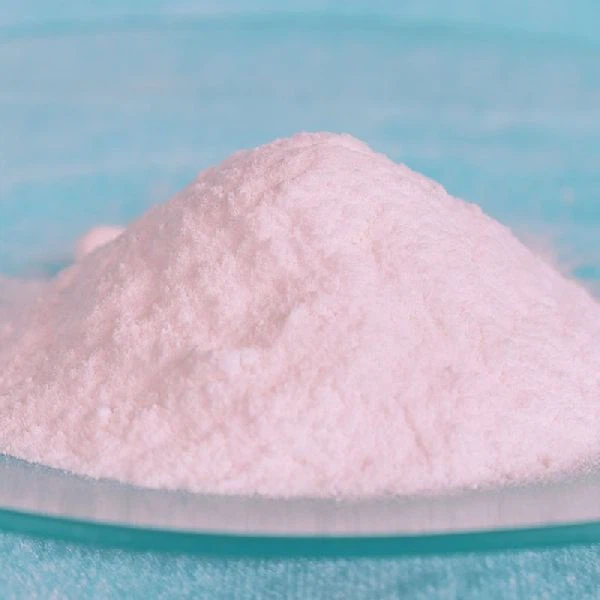
● Appearance: Pale pink solid salt, pale red crystals, translucent, rose-red prisms
● Density: 3.24 g/cm3
● Boiling Point: 850°C
● Melting Point: 710°C
● Molecular Weight: 151.001 g/mol
● Solubility: Soluble in water, insoluble in alcohol
● Uses: Dyeing, porcelain glazes, varnishes, fertilizers, feed.
Product Precautions
According to the Safety Data Sheet (SDS) for scandia-stabilized zirconium oxide, there are no special environmental precautions required. However, standard laboratory safety precautions should be followed when handling.
You should follow the usual precautionary measures. These include:
● Keeping chemicals away from food, beverages, and feed
● Removing contaminated clothing immediately
● Washing your hands before breaks and at the end of work
Here are some precautions for handling vanadium electrolyte:
● Avoid mists
● Wear protective clothing
● Wash thoroughly after exposure
● Use local exhaust ventilation
● Wear a respirator if ventilation is not available
Here are some precautions for handling manganese sulfate:
● Wear protective gloves and eye/face protection
● Avoid contact with skin and eyes
● Do not eat, drink, or smoke while using this product
Certifications
We has ISO quality system certificates and reports.


Our Factory
The company possesses first-class technology R&D platforms and production lines of scandium and vanadium products.


Frequently Asked Questions
Q: What is the purpose of adding manganese II sulfate?
Q: Is manganese sulphate acidic or basic?
Q: What are the preparation methods of Manganese Sulphatede?
Preparation: Manganese sulfate can be prepared by:
- Dissolving 480 g of MnSO4.4H2O in water and diluting to one liter
- Treating manganese dioxide with sulfur dioxide
- Mixing potassium permanganate with sodium bisulfate and hydrogen peroxide
Q: What is another name for manganese sulphate?
Q: What is manganese sulphate used for in agriculture?
Q: What are the preparation methods of Vanadium Electrolyte?
- Electrolytically dissolving vanadium pentoxide (V2O5) in sulfuric acid (H2SO4)
- A four-stage countercurrent extraction
- A three-stage countercurrent stripping
Q: What stabilizers are in zirconia?
Q: What are the Advantages of Yttria Stabilized Zirconia?
Yttria stabilized zirconia has a high strength that makes it suitable for applications involving materials with high strength.
High-temperature Resistance
Yttria-stabilized zirconia has high-temperature resistance. This means that they can be used to make structures that are used in a high-temperature environment without being jeopardized. They can be used as refractory materials because they are not easily destroyed by high temperatures.
Corrosion Resistance
YSZ is a corrosion-resistant material. Therefore, it lasts longer than other materials that are not. Yttria stabilized zirconia is not affected by acids or other chemicals when they come in contact with it. It can be used as a coating or in parts of machines that are prone to corrosion without being marred.
Oxidation Resistance
Yttria stabilized zirconia shows oxidation resistance. This means that YSZ does not show any change when it is exposed to oxygen. It is a durable and reliable material. Due to its oxidation resistance, yttria-stabilized zirconia can be used as a coating. In addition, it can be used to make parts of a machine susceptible to wear. Materials coated with yttria-stabilized resistance are not likely to rust.
Q: What are the different types of zirconia material?
- Zirconia toughened alumina.
- Partially stabilized zirconia.
- Fully stabilized zirconia.
- Tetragonal zirconia polycrystal.
- Transformed toughened zirconia.
- Ceria stabilized zirconia.
Q: Why Use Stabilized Zirconia Instead of Pure Zirconia?
The volume will change during the phase transformation. The transition from tetragonal to monoclinic will lead to about 9% volume increase, which will lead to cracks for the ceramics.
To solve this problem, stabilization of the cubic polymorph of zirconia over a wider range of temperatures is needed. The process is accomplished by the substitution of some of the Zr4+ ions (ionic radius of 0.82 Å) in the crystal lattice with slightly larger ions, e.g., those of Y3+ (ionic radius of 0.96 Å). The newly formed materials are stabilized zirconia.
Q: What is scandia ceria stabilized zirconia?
Q: What is scandia stabilized zirconia?