




Scandium Oxide

We are a professional scandium oxide factory, providing high purity scandium oxide, refined scandium oxide, scandium oxide pieces etc. Products are sold well Chinese market and also exported to Europe, America, Asia, and other countries and regions.
Company Advantages
Experience
We were established in 2011, OSC has been devoted to produce and exploit new products, services or processes over 10 years.
Quality
We have ISO quality system certificates and reports. Strict quality control is applied through the leading testing instruments and professional QA personnel.
Production
The company has the world's largest scandium oxide production line with a production capacity of more than 10 tons per year. It is the first enterprise in the world to realize the large-scale production of scandium oxide.
Team
OSC has an outstanding R&D team, high-end technical professionals, and has strong core competitive advantages in technology, market, brand, and quality.

our products advantagess
Quality
Our products are manufactured to the highest standards of quality and safety.
Best Seller
Our products are exported to many countries around the world and are best-sellers in Europe, America, Asia, and other countries and regions.
Competitive Pricing
Although our product has exceptional properties, we offer it at a competitive price.
High Purity
Our product has a purity of over 99.9%.
Types of Scandium Oxide
High Purity Scandium Oxide
High Purity Scandium Oxide is one of the most expensive elements in production. 95% purity scandium oxide can be purified to 99.99% after one step of extraction.
Refined Scandium Oxide
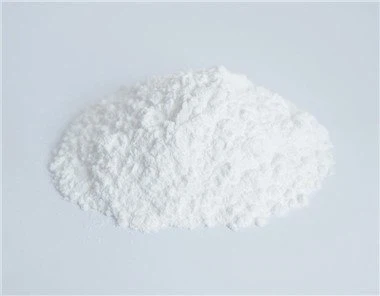
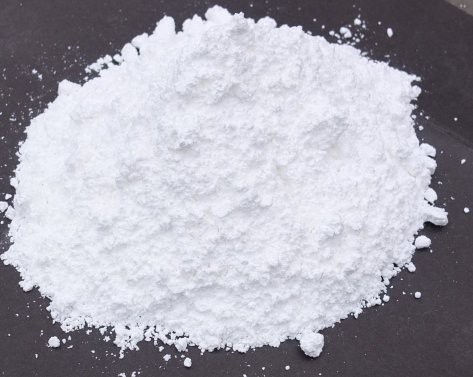
Refined scandium oxide is a whitish powder with the chemical formula Sc2O3. It's the main form of refined scandium produced by the mining industry.
Scandium Oxide Pieces
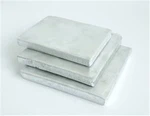
Scandium Oxide Pieces is a white, rare earth metal oxide solid with a high melting point.
Application of Scandium Oxide
High Purity Scandium Oxide
High Purity Scandium Oxide is a highly insoluble thermally stable Scandium source suitable for glass, optic and ceramic applications. Oxide compounds are not conductive to electricity. Metal oxide compounds are basic anhydrides and can therefore react with acids and with strong reducing agents in redox reactions.
Refined Scandium Oxide
Refined Scandium Oxide is used in:
1.Alloys: Refining grain to create a new phase Al3Sc
2.Semiconductor coating: High purity scandium oxide
3.Co-product: Other metal and rare earth productions
Scandium Oxide Pieces
Scandium Oxide Pieces is used in:
1.High-temperature systems
2.Electronic ceramics
3.Glass composition
4.High-intensity discharge lamps
5.Vacuum deposition applications
Properties
High Purity Scandium Oxide
● Appearance: White powder
● Density: 3.86 g/cm3
● Molar mass: 137.91g/mol
● Melting Point: 2,485 °C (4,505 °F; 2,758 K)
● Purity: purity level of 99.99%
Refined Scandium Oxide
● Appearance: White powder
● Density: 3.86 g/cm3
● Molar mass: 137.91g/mol
● Melting Point: 2,485 °C (4,505 °F; 2,758 K)
● Purity: 95%~99.99%
Scandium Oxide Pieces
● Shape: White flake
● Appearance: Irregular white granules, 3-12mm
● Density: 3.86 g/cm3
Product Precautions
Here are some precautions for handling scandium oxide:
Storage
Store in a cool, dry place in tightly closed containers. Avoid allowing the product to enter drains, sewage systems, or other water courses.
Personal Protection
Wear safety glasses and other protective gear to prevent contamination. Avoid contact with skin and eyes. Wash thoroughly before eating or smoking.
First Aid
If scandium oxide gets into the eyes, rinse immediately with plenty of water, including under the eyelids, for at least 15 minutes. Get medical attention immediately if symptoms occur.
Other precautions include:
01
Avoid breathing dusts
02
Avoid dust formation
03
Avoid breathing mist, gas, or vapors
Product Purchasing Advice
When choosing scandium oxide, you can consider the following factors:
Quality
The best quality scandium oxide is 99.9% or higher. This grade is required for electrical applications, but not for alloy applications.
Contaminants
The type of contaminants can be more or less problematic depending on the application.
Water Solubility
Scandium oxide is insoluble in water, but it can be soluble in hot acids.
Certifications
We have ISO quality system certificates and reports.


Our Factory
The company possesses first-class technology R&D platforms and production lines of scandium and vanadium products.


Frequently Asked Questions
Q: Is scandium oxide soluble in water?
Q: What are properties for scandium?
- It appears to be a silvery-white metal.
- It has a moderately soft texture.
- Scandium tarnishes in the air.
- It also burns easily.
- Scandium reacts with water.
- The electronic configuration of Scandium is [Ar]3d14s2.
- The melting point of the metal is 1541oC.
- The boiling point of the metal is 2836oC.
Q: What are the uses of Scandium oxide?
- High-temperature systems: Scandium oxide is heat and thermal shock resistant.
- Electronic ceramics: Scandium oxide has unique properties that are useful in electronic materials.
- Glass composition: Scandium oxide is used as a helper material in glass.
- Solid oxide fuel cells: Scandium oxide improves the performance of these fuel cells, which are used in data centers and hospitals.
- Lasers and lighting: Scandium oxide is used in niche products such as lasers and lighting for stadiums or studios.
- Al-Sc alloys: Scandium oxide is a raw material for Al-Sc alloys, which are used in vehicles, ships, and aerospace.
- Titanium dioxide feedstock: Scandium oxide is used to produce high-quality titanium dioxide feedstock.
- Optical coating: Scandium oxide produces high-index film layers that are transparent to wavelengths as short as 225 nm in the UV region.
Q: How is scandium mined?
Q: Is scandium oxide used in electronics?
Q: How does scandium oxide contribute to the development of new materials?
Q: What is the significance of scandium oxide in the field of ceramics?
● Heat resistance
Scandium oxide is resistant to heat and thermal shock, making it useful in high-temperature systems.
● Electrical insulation
Scandium oxide ceramics are considered favorable for construction and electrical insulation.
● Optical components
Scandium oxide ceramics are promising for use in optical components and solid state lasers.
Q: How does scandium oxide affect the corrosion resistance of materials in which it is incorporated?
- Aluminum alloys: Scandium is a key alloying material in aluminum alloys. It can improve the alloy's corrosion resistance, tensile strength, and weldability. Scandium is also a strong grain refiner and recrystallization inhibitor.
- Steel: Scandium can increase polarization resistance, reduce corrosion rate, and inhibit corrosion products. It can also enhance tensile strength and reduce susceptibility to stress corrosion.
- Copper: Scandium doping can increase the corrosion resistance of coatings.
Q: How does scandium oxide behave under different temperature conditions?
Q: What are the primary markets for scandium oxide globally?
The global scandium market is divided into the following end-user industries:
- Aerospace and defense
- Solid oxide fuel cells (SOFCs)
- Ceramics
- Lighting
- Electronics
- 3D printing
- Sporting goods
Q: Can scandium oxide be employed in water treatment processes?
Scandium oxide is insoluble in water. However, scandium oxide can be fabricated as a TFT dielectric with excellent electrical properties using a water-inducement method.
Q: Can scandium oxide be combined with other compounds or materials to create novel composites?
● Titanium nitride
A ceramic coating material that is hard, wear-resistant, and corrosion resistant.
● Lead oxide and tantalum oxide
When combined with scandium oxide, these materials produce a ceramic that can detect heat.
● Aluminium
When alloyed with scandium, aluminium becomes stronger, more flexible, and more resistant to heat and corrosion.
● Metal oxide film resistors
Scandium oxide can be used as a dopant to improve the stability and reliability of these resistors
Q: What is exploring global supply and demand of scandium oxide in 2030?
Q: How does scandium oxide contribute to advancements in the medical industry?
- 43Sc: A positron (β+) emitting isotope for imaging
- 44Sc: A positron (β+) emitting isotope for imaging
- 47Sc: A beta particle (β−) emitting radionuclide
Q: Can scandium oxide be synthesized through artificial means, and if so, how?
1.Some methods include:
- Sol-gel route
- Hydrothermal reactions
- Solid-state reactions
- Water-inducement method
2.Other methods include:
- Forming a concentrated colloidal sol of Sc(OH)3
- Calcining a sulfate precursor at 1100 °C for 4 h
3.Scandium oxide can also be synthesized by:
- Preparing ScOOH nanoparticles in solution using ScCl3, xH2O as a precursor
- Drying ScOOH sol
- Synthesizing an oxides mixture Sc2TiO5:Eu2Ti2O7:Sc2O3 in equilibrium phase by solid state reaction at 1100 °C for 48 h