



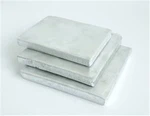

Additive Manufacturing Aluminum Alloy

We are a professional additive manufacturing aluminum alloy factory, providing scandium compound, scandium alloy, scandium oxide, scandium powder, scandium metal etc. Products are sold well Chinese market and also exported to Europe, America, Asia, and other countries and regions.
Company Advantages
Experience
We were established in 2011, OSC has been devoted to produce and exploit new products, services or processes over 10 years.
Quality
We have ISO quality system certificates. Strict quality control is applied through the leading testing instruments and professional QA personnel.
Production
The company has the world's largest scandium oxide production line with a production capacity of more than 10 tons per year. It is the first enterprise in the world to realize the large-scale production of scandium oxide.
Team
OSC has an outstanding R&D team, high-end technical professionals, and has strong core competitive advantages in technology, market, brand, and quality.





Product Advantages
Quality
Our products are manufactured to the highest standards of quality and safety.
Best Seller
Our products are exported to many countries around the world and are best-sellers in Europe, America, Asia, and other countries and regions.
Competitive Pricing
Although our product has exceptional properties, we offer it at a competitive price.
High Purity
Our product has a purity of over 99.9%.
Types of Aluminum Alloy
Aluminum Magnesium Scandium Powder
Aluminum-magnesium-scandium (Al-Mg-Sc) is an alloy that has two four-phase ternary monotectic reactions. The solid phases in equilibrium with the two liquids at M1 are ScAl2 and ScAl. At M2, they are ScAl and Sc2Al.
Alsi7Mg
AlSi7Mg is a heat-treatable aluminum alloy that is commonly used to make lightweight components for the automotive and aerospace industries. It has good casting properties and performs well during powder bed fusion.
Aluminum Scandium Welding Wire
Aluminum-scandium (AlSc) alloys are a type of high-performance aluminum alloy. They are made up of mainly aluminum (Al) and small amounts of scandium (Sc).
Aluminum Copper Manganese Alloy Wire
Aluminum-copper alloys (AlCu) are made up of aluminum and traces of copper. Other alloys may also include magnesium, silicon, and manganese. Manganese can increase the strength of the alloy.
Aluminum 2319 Wires
Aluminum 2319 Wires is a heat-treatable alloy that's made of aluminum, copper, manganese, vanadium, zirconium, and titanium. It has a high copper content and a controlled manganese level.
Aluminum Magnesium Silicon Alloy Wire
Aluminum-magnesium-silicon (AlMgSi) alloy wire is a strong and durable material. It's made from a high-quality aluminum-magnesium-silicon alloy (Al98Mg1Si0.6).
Applications
Aluminum Magnesium Scandium Powder
Aluminum-magnesium-scandium alloys are used in aerospace engineering. They are strong for their weight, which makes them ideal for applications where weight is important.
AlSi7Mg
AlSi7Mg is a heat-treatable aluminum alloy used in many applications, including: Aerospace, Automotive, Railway, Armament, Precision engineering.
Aluminum Scandium Welding Wire
Aluminum-scandium (AlSc) alloys are suitable for the aerospace industry.
Aluminum Copper Manganese Alloy Wire
Aluminum copper manganese alloy wire has many applications, including: Welding, Bearing assembly, Ballast, Casting, Step soldering, Radiation shielding, Marine propellers, Fittings, Gears, Bearings.
Aluminum 2319 Wires
Aluminum 2319 wires are commonly used in high strength structural and aircraft applications. They are also used in truck body applications.
Aluminum Magnesium Silicon Alloy Wire
Some of the primary applications include: Bearing assembly, Ballast, Casting, Step soldering, Radiation shielding.
Aluminium Production Process
Bauxite Mining
The aluminium production process starts with the mining of bauxites, an aluminium rich mineral in in the form of aluminium hydroxide. About 90% of global bauxite supply is found in tropical areas.
Alumina Production
Bauxite is crushed, dried and ground in special mills where it is mixed with a small amount of water. This process produces a thick paste that is collected in special containers and heated with steam to remove most of the silicon present in bauxites.
Reduction Process
At an aluminium smelter, alumina is poured into special reduction cells with molten cryolite at 950℃. Electric currents are then induced in the mixture at 400 kA or above; this current breaks the bond between the aluminium and oxygen atoms resulting in liquid aluminium settling at the bottom of the reduction cell.
Primary Aluminium
Primary aluminium is cast into ingots and shipped to customers or used in the production of aluminium alloys for various purposes.
Aluminium Alloys
Foundry aluminium alloys are used to make finished goods by casting the alloys into special moulds. The required properties are given to the metal by adding various admixtures such as silicon, copper or magnesium. These alloys are used in the manufacture of automobile and aviation engines and aluminium alloy wheels.
Recycling
Unlike iron, aluminium is corrosion resistant so it can be remelted and reused an infinite number of times. The added benefit is that recycling aluminium requires only 5% of the energy needed to make the same amount of primary aluminium.
Certifications
We has ISO quality system certificates and reports.


Our Factory
The company possesses first-class technology R&D platforms and production lines of scandium and vanadium products.


FAQ
Q: What is Aluminum Alloy?
Aluminum is rarely used in its pure form because it is soft and weak. The other elements improve its mechanical properties and make it suitable for different applications.
Q: What is stronger steel or aluminum alloy?
But comparing aluminum to steel is a bit like comparing apples to oranges: steel is already an alloy, while aluminum is an element. Carbon steel, a basic steel alloy, is composed of iron (Fe) and carbon (C). Pure aluminum, despite its many winning properties, is too soft and not strong enough for most industrial applications. But aluminum alloys can be thirty times stronger than pure aluminum, and regularly exceed steel in strength-to-weight ratios.
Q: What is the difference between Aluminum and Stainless Steel?
- Strength
Stainless steel is heavier and stronger than aluminum. In fact, aluminum is around 1/3 the weight of steel. Even though stainless steel is stronger, aluminum has a much better strength to weight ratio than stainless steel.
- Conductivity
Steel is a poor conductor of electricity due to its dense protective oxide layer. On the other hand, aluminum is a very good electrical and thermal conductor.
- Cost
Aluminum is a more costly than stainless steel if you look at price based on weight. But, if you look at price by volume, Aluminum is more cost effective because you get more product.
- Heat Resistance
When comparing stainless steel vs aluminum, stainless steel has much better resistance to heat with a melting point of 2500 ℉, while aluminum becomes very soft around 400 ℉ with a melting point of 1220 ℉. However, aluminum has the advantage over steel in cold temperatures. As the temperature decreases, the tensile strength of aluminum increases, while steel becomes brittle in low temperatures.
- Corrosion Resistance
Aluminum does not rust; however, it does corrode when exposed to salt. Stainless steel is highly corrosion resistant and does not easily rust. In addition, stainless steel is non-porous which gives it more resistance to corrosion.
- Environmental Impact, Recyclability
Stainless steel is known for its good recyclability. According to Napa Recycling, steel is the most recycled material in the world. It has distinct magnetic properties that make it an easy material to recover from the waste stream for recycling. In addition, the properties of steel remain unchanged no matter how many times the steel is recycled.
Even though steel is the most recycled material, aluminum is the most recyclable of all materials. As a matter of fact, discarded aluminum is more valuable than any other material in your recycling bin. Nearly 75% of all aluminum produced in the U.S. is still in use today because aluminum can be recycled over and over again in a true closed loop. To learn more about recycling aluminum, visit the Aluminum Association.
- Different Applications of Aluminum vs Steel
Aluminum and steel are everywhere. If you look around at any given place, chances are you will see something containing one of these metals. Below are some common applications of stainless steel and aluminum.
Q: What are the advantages and disadvantages of Aluminum Alloy?
Pros
- It is a cheaper option
- Odorless and impermeable
- Reflectivity and flexibility
- High machinability and recyclability
- Corrosion Resistance
- High thermal conductivity and electrical conductivity
Cons
- Difficult welding process
- Corrodes quickly in salt water
- It may affect the tastes of packaged food
Q: How to choose between Aluminum Alloy and Titanium?
Applications
The respective properties of titanium and aluminum make them ideal for various applications. For instance, titanium is perfect for applications that require heat-resistant materials. These include medical applications, satellite components, marine components, and fixtures.
Meanwhile, aluminum is suitable for vehicle and bicycle frames, heat sinks, electrical conductors, small boats, and other applications needing high thermal conductivity.
Optional Machinability Processes
The material you choose for your project determines the geometrics of your final products. Also, it determines the machining method used for the material while producing your parts. Aluminum is more compatible with a wide range of processes. It provides high-quality components in cases when you need to make parts quickly.
Also, this material is easier to work with than titanium and is the better option for making intricate parts with tight tolerance requirements.
Cost
Cost of production is one of the fundamental factors you must consider when choosing a metal for your project. Generally, aluminum is a cost-effective metal used for precision machining and many other prototyping processes. Fabricating components is often cheaper with aluminum than with titanium.
Titanium has high extraction and fabrication cost compared to aluminum. Its high price limits its application. However, titanium is an ideal material for your machining purposes if the machining cost of titanium is not a challenge.
Weight and Strength
Titanium vs. aluminum weight and strength are other differences between these metals. Titanium has a density of 4500 kg/m3 in contrast to the 2712 kg/m3 of aluminum. As a result, titanium is heavier when compared to aluminum. This means you require less titanium in your machining to have a lightweight product.
Titanium is the better choice when it comes to strength. Its tensile strength varies from 230 MPa to 1400 MPa compared to aluminum, which has a margin of 90 MPa to 690 MPa. Pure titanium has low power, while pure aluminum is weaker. However, you can combine aluminum with other metal alloys to enhance its strength based on your needs.
Waste Produced
Machining waste is another crucial factor when handling complex design geometrics projects. Complex design geometrics may limit your machining method regardless of your chosen material. As a result, milling away excess material becomes inevitable. Sometimes, most producers utilize aluminum for prototyping and titanium is used for small batch production of special purpose products. In most cases, choosing inexpensive aluminum over titanium is advisable as it helps to reduce overall cost.
Aesthetic Requirements
Some milled parts often require applying specific colors for aesthetic finishing. Titanium gives a silver surface look that appears darker when under the light. Meanwhile, aluminum has a silvery-white appearance. The material you choose will determine if your product has a silver or dull grey color. However, both materials can take various other metal surface finishing procedures like bead blasting, polishing, chrome plating, etc.
Conclusion
Titanium and aluminum are metals with remarkable properties, respective advantages, and applications. Despite having almost similar qualities, they have individual applications in which one is more suitable than the other. While titanium is ideal for heat-resistant applications, aluminum has the best thermal conductivity that your project needs.
Q: Which Metal Lasts Longer Between Titanium and Aluminum?
Q: How Can I Differentiate Between Titanium and Aluminum?
Q: What is the difference between AlSi7Mg and AlSi10Mg?
Q: What is AlSi7Mg?
Because it offers high strength, relatively high hardness and high thermal conductivity, it is used for parts which are subject to high loads.
Applications include housing and ductworks, engine parts, production tools and molds for both prototyping and manufacturing purposes.
Q: What is the best wire for welding aluminum?
Q: What powder is used in 3D printing?
Q: What is the most widely used aluminum alloy?