




Scandium

We are a professional scandium factory, providing scandium compound, scandium alloy, scandium oxide, scandium powder, scandium metal etc. Products are sold well Chinese market and also exported to Europe, America, Asia, and other countries and regions, occupying most of the global market share of scandium resources.
Company Advantages
Experience
We were established in 2011, OSC has been devoted to produce and exploit new products, services or processes over 10 years.
Quality
We have ISO quality system certificates and reports. Strict quality control is applied through the leading testing instruments and professional QA personnel.
Production
The company has the world's largest scandium oxide production line with a production capacity of more than 10 tons per year. It is the first enterprise in the world to realize the large-scale production of scandium oxide.
Team
OSC has an outstanding R&D team, high-end technical professionals, and has strong core competitive advantages in technology, market, brand, and quality.




our products advantagess
Quality
Our products are manufactured to the highest standards of quality and safety.
Best Seller
Our products are exported to many countries around the world and are best-sellers in Europe, America, Asia, and other countries and regions.
Competitive Pricing
Although our product has exceptional properties, we offer it at a competitive price.
High Purity
Our product has a purity of over 99.9%.
Applications
Scandium are Used in
Scandium alloys are suitable for the aerospace industry because of their high strength, ductility, and weldability.
A Russian aluminum producer developed a Scandium alloy that is lighter and stronger than other alloys. This alloy can save fuel for commercial vessels.
Scandium alloys are used in high-end bicycle frames.
Scandium alloys are used in baseball bats.
Types of Scandium
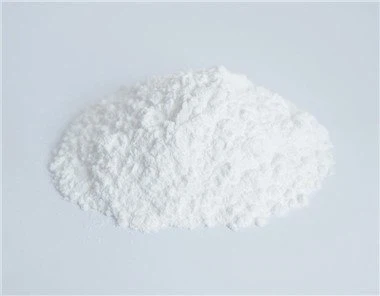
Scandium Powder
Scandium Powder is a fine, metallic powder composed of scandium atoms. It is a rare earth element with atomic number 21 and the symbol Sc on the periodic table. Scandium Powder is known for its high melting point, lightweight, and excellent heat and electrical conductivity properties.
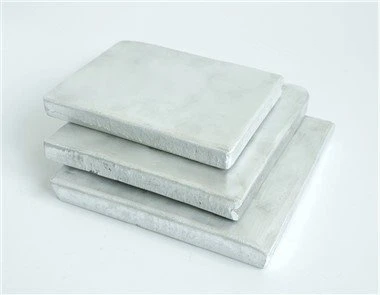
Scandium Alloy
The chemical composition of the aluminium-scandium master-alloy is 2% scandium and the balance is 99.7% aluminium. The master alloy is used to add scandium to Al-Mg-Zr containing alloys, which are used in the form of sheet and plate. These sheets and plates are mainly used by aircraft manufactures.
Scandium Oxide
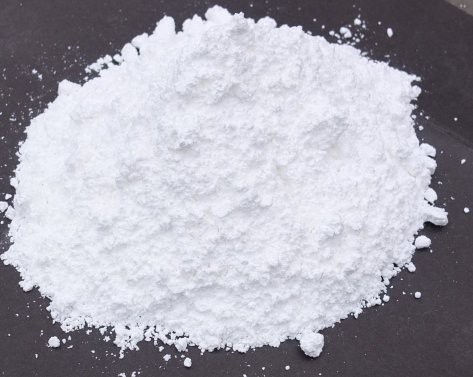
Scandium oxide, also known as scandia, is an inorganic compound with the formula Sc2O3. It's a rare earth oxide with a high melting point.
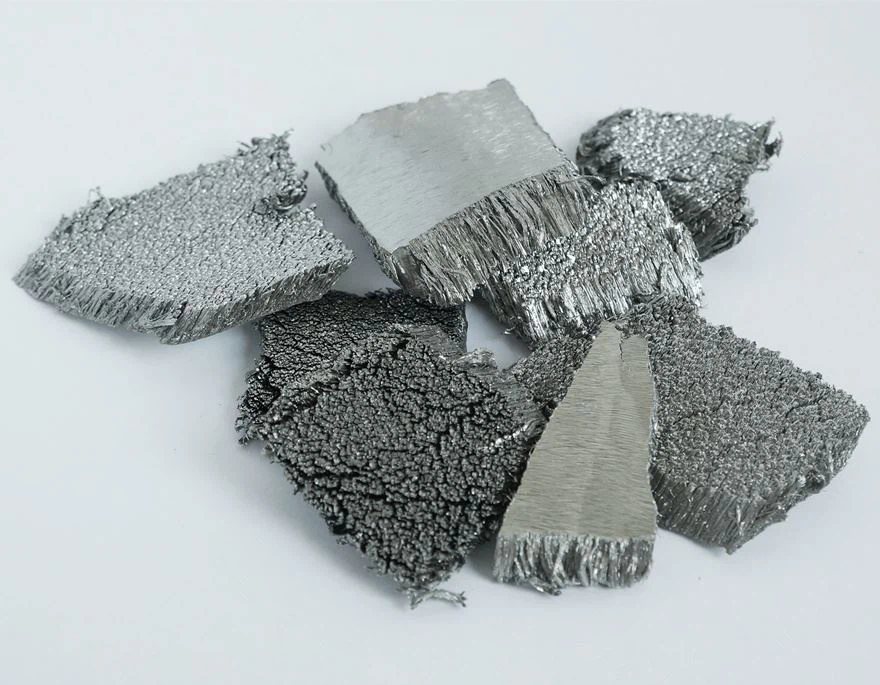
Scandium Metal
Scandium metal is a silvery-white metallic transition metal, often classified as a rare earth element (REE), together with yttrium (Y) and the 15 lanthanides (La).
Features

Scandium Metal
1.Soft metal with a silvery appearance
2.Can be oxidized by air
3.Dissolves slowly in most dilute acids.
4.Scandium turnings ignite in the air with a brilliant yellow flame to form scandium (iii) oxide.
Scandium Alloy
1.Adding scandium makes Aluminium stronger
2.Scandium aluminum alloy has better weld-ability properties
3.Grain structure during forming and extrusion stays intact
4.Stronger at rising temperature, in combination with Zirconium.
Scandium Powder
1.Scandium Powder can be oxidized by air.
2.Dissolves slowly in most dilute acids.
Scandium Oxide
1.Cubic crystal structure
2.An insulator with a band gap of 6.0 ev
Physical Properties of Scandium
There are many important properties of scandium that distinguish it from other elements. These physical and chemical properties of scandium are mentioned below:
- It appears to be a silvery-white metal.
- It has a moderately soft texture.
- Scandium tarnishes in the air.
- It also burns easily.
- Scandium reacts with water.
- The electronic configuration of Scandium is ArArAr3d14s2.
- The melting point of the metal is 1541oC.
- The boiling point of the metal is 2836oC.
- The scandium's density is of 2.99 grams per cubic centimeter.
Product Precautions
Here Are Some Precautions for Handling Scandium:
- Avoid dust, Dust can be a fire hazard.
- Avoid breathing dust or fumes.
- Provide ventilation, if dust is created, provide adequate ventilation.
- Avoid skin and eye contact.
- Wear protective equipment, Wear appropriate respiratory and protective equipment.
- Isolate spills, Isolate the area of any spills.
- Seek medical advice, If skin contact occurs, wash with soap and water and seek immediate medical advice.
Certifications
We have ISO quality system certificates and reports.


Our Factory
The company possesses first-class technology R&D platforms and production lines of scandium and vanadium products.


Frequently Asked Questions
Q: How strong is scandium alloy?
Q: What is scandium alloy made of?
Q: Is scandium toxic to humans?
Q: What are 2 common uses for scandium?
Q: How to extract scandium?
- The first way is extracting it as uranium mill tailing's by-product.
- The second method through which scandium can be prepared is when molten scandium chlorides, lithium, and potassium is electrolyzed using electrodes of molten zinc and tungsten wire.
Q: What are the properties of Scandium?
A few important properties of scandium are that the mass number of this element is 44.96 u. Scandium belongs to Group 3, Period 4, and d-block of the periodic table. The atomic structure of scandium consists of 21 protons and 24 neutrons. Scandium also displays properties of electronegativity as it's a metal. Scandium's electronegativity is relatively high, i.e, 1.36.
Scandium is commonly found on Earth in the +3 oxidation state. The element scandium, when in the oxidation state, bears a close resemblance to other rare metals on Earth. Due to its significantly small ionic radius, some of the behavior and characteristics of scandium are rare from other earth elements. For the same reason, the element scandium, in its ionic form, is a relatively strong acid and also has a higher tendency of forming complexions.
Q: What is Scandium?
Scandium is also one of the expensive elements due to its scarcity and limited production. The price of pure scandium can be approximately $7000/ per kg over even higher than that. Scandium has a high cosmic abundance as well. Also, it is the twenty-third (23rd) most abundant element in the sun.
It is an element that is considered non-toxic. Although, there isn't much extensive research in terms of health and safety issues with scandium. Scandium chloride is a compound that can be of a lethal dose. Therefore, this compound and other compounds of scandium should be handled with care as they can be considered for moderate toxicity.
Q: What impact does scandium have on the environment?
Scandium is dumped in the environment in many different places, mainly by petrol-producing industries. It can also enter the environment when household equipment is thrown away. Scandium will gradually accumulate in soils and water soils and this will eventually lead to increasing concentrations in humans, animals and soil particles.
With water animals scandium causes damage to cell membranes, which has several negative influences on reproduction and on the functions of the nervous system.
Q: What impact does scandium have on human health?
Scandium has no biological role. Only trace amounts reach the food chain, so the average person's daily intake is less than 0.1 microgram.
Scadium is not toxic, although there have been suggestions that some of its compounds might be cancerogenic.
Scandium is mostly dangerous in the working environment, due to the fact that damps and gasses can be inhaled with air. This can cause lung embolisms, especially during long-term exposure. Scandium can be a threat to the liver when it accumulates in the human body.
Q: Where is scandium most commonly found?
Q: What are the medical uses of scandium?
Q: What foods are high in scandium?
Q: Why is scandium used in aerospace?
Q: What are five common uses of scandium?
Q: What are the potential future advancements or innovations in scandium alloy?
● 3D printing
Sc-Al alloy powders could be used to 3D print complex metal structures.
● Defense
Scandium-aluminum alloys could replace high-strength steel armor in military platforms and aerospace-grade titanium alloys in fighter jets.
● Light-weighting
Scandium alloys could reduce the weight of vehicles, which could improve fuel economy.
● Solid oxide fuel cells
Scandium could be used in solid oxide fuel cells for utility and commercial scale applications.
Q: Can scandium alloy be combined with other alloys or materials?
Q: How does scandium alloy affect the performance of other metals?
● Improve strength
Scandium can strengthen aluminum in three ways:
● Improve weldability
Scandium can reduce hot cracking in welds and increase strength in the welds.
● Improve corrosion resistance
Scandium can improve or stabilize the material's ductility.
● Improve fatigue behavior
Scandium can create superplastic alloys that can form at strain rates up to 10− 2 s− 1.
Q: Can scandium alloy be recycled?