



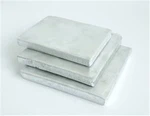

Aluminum Rare Earth Alloy

We are a professional aluminum rare earth alloy factory, providing aluminum yttrium alloy, aluminum erbium alloy, aluminum lanthanum alloy, aluminum cerium alloy, aluminum neodymium alloy, aluminum samarium alloy etc. Products are sold well Chinese market and also exported to Europe, America, Asia, and other countries and regions.
Company Advantages
Experience
We were established in 2011, OSC has been devoted to produce and exploit new products, services or processes over 10 years.
Quality
We have ISO quality system certificates. Strict quality control is applied through the leading testing instruments and professional QA personnel.
Production
The company has the world's largest scandium oxide production line with a production capacity of more than 10 tons per year. It is the first enterprise in the world to realize the large-scale production of scandium oxide.
Team
OSC has an outstanding R&D team, high-end technical professionals, and has strong core competitive advantages in technology, market, brand, and quality.


Product Advantages
Quality
Our products are manufactured to the highest standards of quality and safety.
Best Seller
Our products are exported to many countries around the world and are best-sellers in Europe, America, Asia, and other countries and regions.
Competitive Pricing
Although our product has exceptional properties, we offer it at a competitive price.
High Purity
Our product has a purity of over 99.9%.
Types of Aluminum Rare Earth Alloy
Aluminum Yttrium Alloy
Yttrium-Aluminum Alloy (Y-Al Alloy) is a pre-alloyed mixture of alloying elements. It's also known as a modifier, hardener, or grain refiner.
Aluminum Erbium Alloy
Aluminum-erbium is a rare earth alloy made from aluminum (Al) and erbium (Er). It's a high purity master alloy that can be used to: Improve aluminum performance, Grain refine, Harden, Enhance ductility, Improve machinability.
Aluminum Lanthanum Alloy
Aluminum-lanthanum is a rare earth alloy that is used in the metallurgical industry as a reducing agent and additive. It is also used as a master alloy for grain refining, hardening, and improving alloy performance.
Aluminum Cerium Alloy
Al-Ce alloys are created by combining aluminum with cerium. They are used as an additive to harden aluminum alloys. Al-Ce alloys are also compatible with traditional aluminum alloy additions.
Aluminum Neodymium Alloy
Aluminum-neodymium is a rare earth alloy that can be used to improve aluminum's performance. It can be used for: Grain refining, Hardening, Improving ductility, Improving machinability.
Aluminum Samarium Alloy
Aluminum samarium alloy is a rare earth alloy made from different proportions of aluminum and samarium.
Applications
Aluminum Yttrium Alloy
Yttrium is often used as an additive in alloys to increase their strength.
Some applications of yttrium aluminum alloys include:
- Bearing assembly
- Ballast
- Casting
- Step soldering
- Radiation shielding
- Yttrium-aluminum garnet (YAG) in lasers that can cut through metals
Aluminum Erbium Alloy
Aluminum-erbium alloy can enhance properties such as: Ductility, Machinability, Recrystallizing temperature.
Aluminum-erbium alloy can be used for:
- Grain refining
- Hardening
- Improving aluminum performance
- Preventing cracking in traditional manufacturing processes
- Structural members in the aerospace, building, and automobile industries
Aluminum Lanthanum Alloy
Lanthanum-aluminum is a rare earth alloy that can be used for: Grain refining, Hardening, Improving alloy performance, Improving ductility, Improving machinability.
Lanthanum compounds are also used in:
- Petroleum refining catalysts
- Ceramics production
- Glass production
Aluminum Cerium Alloy
Aluminum cerium alloys are lightweight, corrosion-resistant, and heat tolerant. They have many desirable properties for a variety of applications, including: Automotive, Aerospace, Power generation, Casting alloys, Building industry, Household appliances.
Aluminum Neodymium Alloy
Aluminum-neodymium is a high purity rare earth alloy. It can enhance aluminum's properties, such as ductility and machinability.
Aluminum-neodymium (Al–Nd) alloy has many applications:
- Grain refining
- Hardening
- Improving aluminum performance
Aluminum Samarium Alloy
Aluminum samarium alloy is designed for several applications, including: Aerospace, Automotive, Consumer.
Precautions for using Aluminum Rare Earth Alloy
Here are some precautions for handling aluminum:
Financial Big Data
- Keep dry
- Avoid dust
- Avoid fumes
Retail Big Data
- Provide ventilation
- Avoid sharp edges
- Avoid heated metal
Industrial Big Data
- Store away from corrosive chemicals
- Wear protective clothing
- Wash thoroughly after exposure
Craftsmanship
Yttrium-aluminum alloy (Y-Al Alloy) is produced by heating the desired quantities of the two metals in a crucible. At a temperature of approximately 950°C, an exothermic reaction occurs between the liquid aluminum and the solid yttrium.
Aluminum-erbium master alloys are produced using high-temperature physicochemical processes. The process depends on the characteristics of the reducing metal and the elements in the flux. The process is based on the difference in affinity between the reducing metal and the metal being reduced to oxygen or the elements in the flux.
The electrolysis process is used to transform rare earth oxide into rare earth metal. This process uses a direct electric current in a molten salt bath.
Here are some methods for producing aluminum samarium alloy:
- Strip casting: A molten alloy is cast onto a rotating copper roll and cooled to form flakes.
- Melt spinning: Molten metal is ejected from a crucible onto a spinning copper wheel, causing the metal to solidify and form ribbons.
- Master alloy and reduction method: This method can simplify equipment and preparation.
Certifications
We has ISO quality system certificates and reports.


Our Factory
The company possesses first-class technology R&D platforms and production lines of scandium and vanadium products.


FAQ
Q: What effects does aluminum alloy have on the body?
- Skin irritation
- Eye irritation
- Acute or chronic health effects
- Cancer
- Allergy or asthma symptoms
- Breathing difficulties
- Genetic effects
Q: What is Aluminum Alloy?
Q: What is the alloy of yttrium?
Q: What is aluminum alloy weakness?
Q: What is aluminum erbium alloy?
Q: What are the applications of Aluminum Yttrium Alloy?
- Hardeners: Used for enhancing the physical and mechanical properties of metal alloys.
- Grain Refiners: Used for controlling the dispersion of individual crystals in metals to produce a finer and more uniform grain structure.
- Modifiers & Special Alloys: Typically used to increase strength, ductility, and machinability.
Q: What are the applications of Aluminum Lanthanum Alloy?
- Hardeners: Used for enhancing the physical and mechanical properties of metal alloys.
- Grain Refiners: Used for controlling the dispersion of individual crystals in metals to produce a finer and more uniform grain structure.
- Modifiers & Special Alloys: Typically used to increase strength, ductility, and machinability.
Q: What are the desirable properties of Aluminum Cerium Alloy?
- High ductility
- Good castability
- High tolerance to casting defects
- Exceptional high-temperature mechanical property retention
- Robust room-temperature mechanical properties
Q: How does the addition of yttrium affect the properties of aluminum in the alloy?
- Decrease the grain size of the as-cast alloy
- Increase the nucleation ratio
- Enhance the strength of Al-Zn-Mg-Cu alloy at high temperatures
- Improve the strength properties of T6 tempered Al-Cu-Mg-Ag alloys at 300 °C
Q: Are Aluminum alloys resistant to corrosion?
Aluminum alloys resist corrosion because they form a thin oxide layer that prevents further corrosion. This oxide layer is called aluminum oxide or Al2O3.
Q: What are the Effect of alloying elements on aluminum alloy corrosion?
1. The effect of Mg
Mg is added to aluminum alloy to improve mechanical properties. Mg reduces the reaction rate of cathodic reaction when present in solid solution (due to low exchange current density of Mg) and increases corrosion resistance.
2. The effect of Si
Si is added with Mg creates a Mg2Si precipitate that enhances the aluminum alloy's hardness but causes local corrosion. Adding excessive Si will cause stress corrosion cracking due to Si appearing at the boundary and speed up the cathodic reaction.
3. The effect of Cu
Similar to Mg, the presence of Cu causes an aluminum alloy to form a localized cathodic reaction that causes corrosion. However, 600 or 700 series alloys' principal aim at adding Cu to the composition for strengthening hardness purpose, not for the anti-corrosion goal.
4. The effect of Zn
Adding Zn to the aluminum alloy may form τ phase Al-Mg-Zn instead of β phase Al3Mg2, which causes stress corrosion cracking. Alloys used in the aerospace industry still use Zn to form a hardness-enhanced precipitate.
5. The effect of Fe
In the production process, aluminum alloy often mixes Fe into the composition. The Fe removing process is very costly. Fe is difficult to dissolve in the alloy and maintains a cathodic reaction, resulting in reduced corrosion resistance. Fe combined with Mn or Cu in the alloy is also a factor preventing corrosion resistance.
6. The effect of Mg
Including Manganese in the aluminum alloy will reduce Fe concentration and increase corrosion resistance. However, if the amount of Mn exceeds the solubility limit (1.25% by weight), it will lead to the formation of Al6Mn, which increases the cathodic reaction and causes corrosion problems.
7. The effect of Li
Lithium plays the role of increasing aluminum alloy's hardness, so Al-Li alloy is widely used in the aviation field. However, Li appeared along the grain boundaries, causing a rapid increase in the corrosion rate and local spread of corrosion.
Q: Can Aluminum-Erbium alloys be easily recycled?